Green Complete Streets
Green Complete Streets
A growing body of work on safer, more connected, climate-responsive streets — and how we move from vision to delivery.
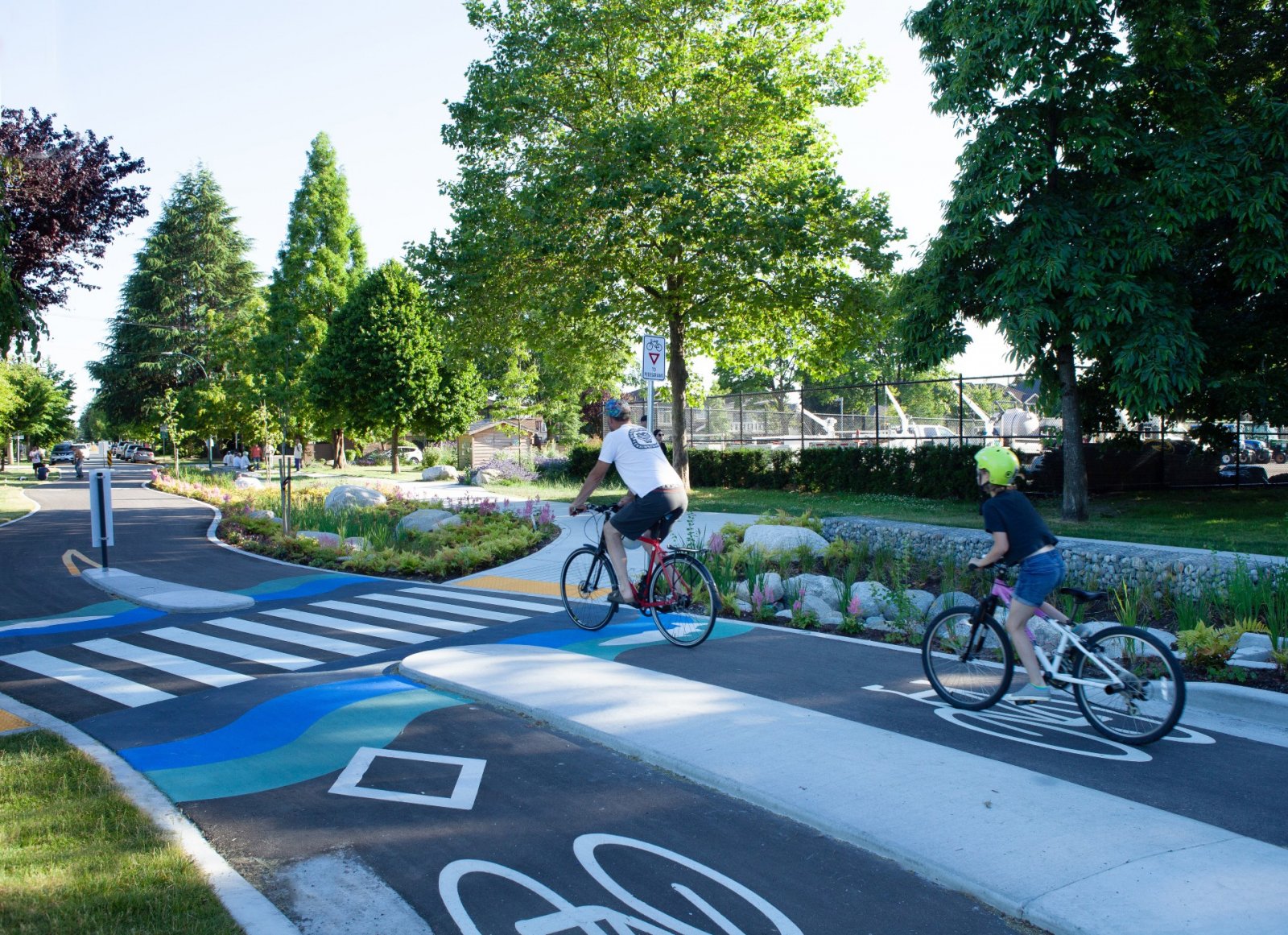
Foundations
Start with the core concepts that define Green Complete Streets. These pages introduce the framework, explain why it matters, and describe how it is applied in practice.
What Are Green Complete Streets?
How streets can combine safe access, green infrastructure, and climate-responsive design.
Why It Matters
Why streets must work for people, places, and climate resilience in real-world conditions.
Design Principles
Core principles for usable, equitable, and ecologically resilient street design.
From Policy to Pavement
Where guidance, funding, and implementation align — and where they often diverge.
The Framework
The Green Complete Streets framework is built around integrated systems, trees as infrastructure, human-centered outcomes, and measurable standards.
Streets are integrated systems
Transportation, trees, drainage, utilities, accessibility, lighting, and public space should be planned together from the start.
Trees are infrastructure
Urban trees are long-lived public assets that provide shade, heat protection, stormwater management, habitat, and support for walking, biking, and transit.
Performance should be measured through human outcomes
Street performance should include safety, accessibility, comfort, shade, thermal conditions, and usability—not only vehicle movement.
Standards determine what gets built
Policies must be translated into design standards, specifications, project scopes, checklists, budgets, maintenance responsibilities, and measurable implementation.
Explore the Knowledge Base
Deeper material for readers who want more technical guidance, case examples, and reference resources.
Design Toolkit
Practical, sourced guidance for green street design — starting with Rapid Delivery (Quick Build) interim treatments.
Trees as Infrastructure
A documented framework for treating urban trees as measurable, funded, lifecycle-managed municipal infrastructure.
Case Studies
Real-world examples of what works, what breaks down, and why outcomes differ in practice.
Mountain View Green Complete Streets
Corridor projects, Council direction, CIP history, and implementation work in Mountain View.
Resources
Guidance, plans, standards, datasets, and tools shaping the field.
Presentations
Talks, workshops, and speaking materials that document the work in practice.