Green Complete Streets
Designing streets that actually work.
This site is about bridging the gap between policy, planning, and implementation — and making sure streets perform in real-world conditions.
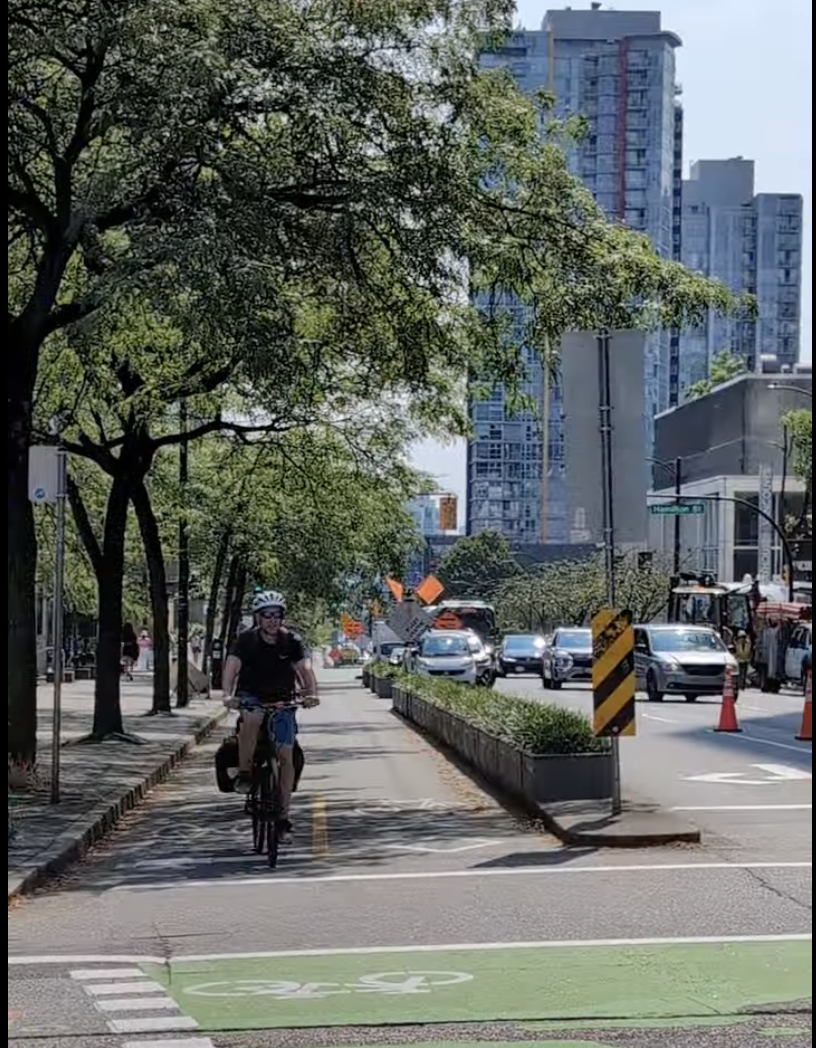
Why this exists
Cities have strong policies. Climate plans, Vision Zero commitments, Complete Streets frameworks. But when projects get built, the outcomes often fall short.
Bike lanes flood. Sidewalks overheat. Trees fail. Infrastructure technically meets requirements — but doesn’t perform for people.
This site focuses on that gap — where good intentions break down in practice — and how to design systems that actually work.
What this work focuses on
- Climate-resilient street design (heat, flooding, usability)
- Green stormwater infrastructure and urban canopy
- Active transportation systems that are actually usable
- Data, mapping, and performance-based evaluation
- Bridging policy, design, and implementation
Approach
The core idea is simple: infrastructure should be evaluated based on whether it works — not just whether it exists.
That means asking:
- Is it available? (Can you use it at all?)
- Is it usable? (Is it safe and comfortable?)
- Is it reliable? (Does it keep working over time?)
This lens comes from systems thinking, observability, and user-centered design — applied to the built environment.
About April Webster
April Webster is a software engineer, data scientist, and advocate for climate-resilient, people-first streets.
Her work sits at the intersection of transportation, data systems, and usability — focusing on how infrastructure performs in real-world conditions.
She has led regional efforts on green complete streets, coordinated multi-agency technical workshops, and advised on projects across the Bay Area.
Her approach combines:
- Systems thinking and data modeling
- Human-centered design
- Policy and implementation experience
What you'll find here
- Practical resources and datasets
- Case studies and implementation insights
- Talks and presentations
- Frameworks for evaluating real-world performance