Central Avenue · Mountain View
A Safer, Greener Central Avenue
Central Avenue connects our neighborhoods, schools and the Stevens Creek Trail. Let’s make it safer, greener and more welcoming — with slower traffic, better walking and biking, more trees and shade, and places for neighbors to gather and relax.
Safer streets. Greener places.
Stevens Creek Trail Schools Downtown + Transit Neighborhoods
Why Central matters
A street that connects people
Central Avenue does a lot of work for a neighborhood street.
Children use it to get to school. People bike it to and from the Stevens Creek Trail. It connects nearby neighborhoods with downtown, the transit center and major employment areas. People walk it, bike it, drive it and live along it.
But it can also be more than a route through the neighborhood. Central is public space running right through it — with opportunities for more trees and shade, safer walking and biking, and small places where neighbors can sit, meet and spend time outside.
That makes Central an important part of Mountain View’s walking and biking network — and an everyday neighborhood place.
Existing conditions
Central could be safer — and the street itself can help
Central is relatively wide, and much of its public right-of-way is devoted to moving and storing vehicles. People biking — including children — share the roadway with moving traffic, and walking and crossing can feel uncomfortable in places.
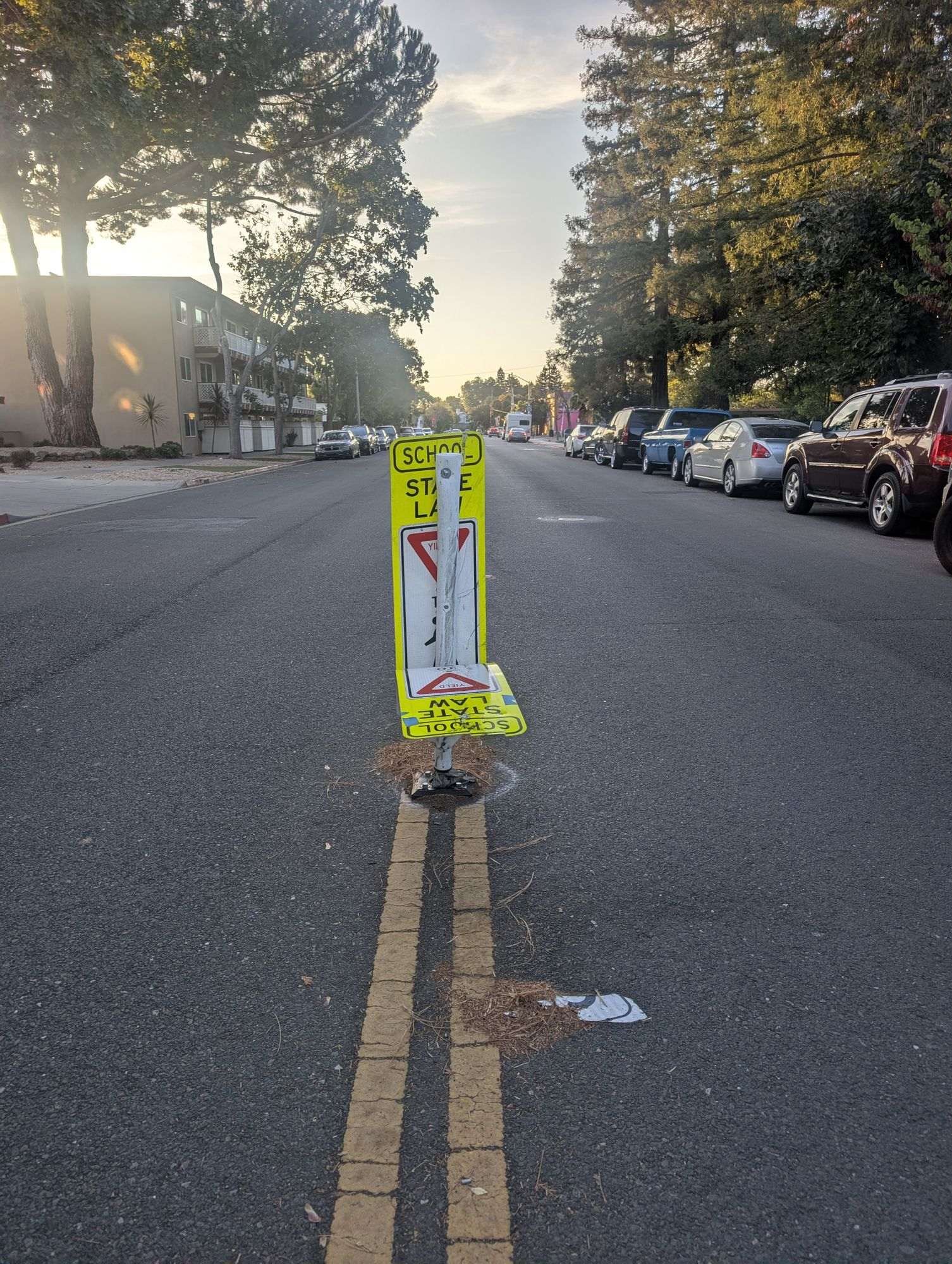
The City has already tried traffic-calming measures on Central, including speed-feedback signage and flexible centerline devices.
Signs can ask people to slow down.
Street design can make slower driving feel natural.
Rather than relying primarily on warnings and plastic devices, we’re asking Mountain View to study physical, self-enforcing changes to the street itself — changes that can also create more room for trees, planting, shade, safer crossings and neighborhood gathering space.
The vision
What could a better Central look like?
We aren’t prescribing one design before the street is studied.
We’re asking Mountain View to look at Central as a complete street — and consider how its existing space could be used differently to make it safer, greener and more comfortable.
-
Safer and slower corridor
Design Central for lower speeds and lower stress — with safer crossings, more predictable space for walking and biking, and a street layout that naturally encourages slower driving for everyone, especially children and seniors.
-
Green traffic calming
Use trees, planting and green infrastructure to help shape and slow the street — through landscaped traffic circles, planted curb extensions, green pinch points, raised crossings and other permanent features.
These can do much more than calm traffic: they can create shade, absorb stormwater, support habitat and make Central a greener, more comfortable place to walk, bike and live.
-
Gathering spaces for community
Use opportunities created by redesigning the street to create linear green parks and small pocket spaces with trees, planting, benches and tables — places to sit in the shade, meet neighbors, rest on a walk or bike ride, and spend time outside.
The bigger picture
A slow, green neighborhood street
What if we stopped thinking about Central as a collection of individual traffic-calming fixes and instead designed the whole street as a safer, greener neighborhood place?
Central could become a slow street or neighborhood greenway — keeping local access while using the street’s physical design to reduce speeds and cut-through traffic and make walking and biking safer and more comfortable.
That redesign could also create landscaped traffic circles, planted pinch points, large-canopy trees, green curb extensions, raised crossings, linear green parks, and small gathering spaces with benches, tables, shade and places to sit and relax.
The street becomes the traffic calming.
The space we reclaim becomes part of the neighborhood.
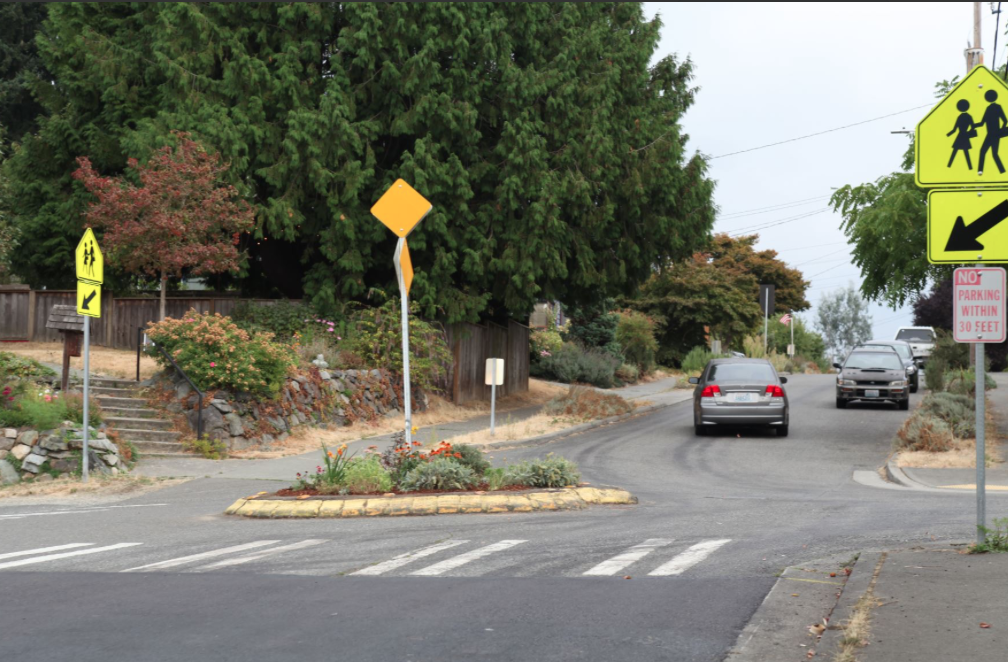
We’re not proposing this as the design for Central. We’re asking Mountain View to study whether an approach like this — alongside the other ideas here — could work on this corridor.
The idea
More green.
Less plastic.
Once we decide to reshape the street, we have a choice about what those changes look like.
Trees. Landscaped traffic circles. Planted curb extensions. Bioswales. Linear green parks. Pocket spaces with benches and tables. Shade. Places to gather.
These aren’t decorations added after the transportation design is finished.
They can be part of the street itself — helping slow traffic and manage stormwater while creating cooler, greener and more useful public space for the people who live here.
Instead of deciding the transportation design first and asking where a few trees can fit afterward, let’s design the street, green infrastructure and neighborhood space together from the beginning.
More green isn’t the goal by itself.
A better place for people is.
Why a petition?
Why a petition?
Mountain View’s Neighborhood Traffic Management Program (NTMP) is the City’s resident-driven process for requesting neighborhood traffic-calming changes. A formal petition is part of how the City evaluates community support for that kind of request.
That’s why we’re collecting actual petition signatures — not just online likes or survey responses.
Signing does not mean endorsing one predetermined street design. It means supporting City evaluation of how Central could become safer, greener and more useful as a neighborhood street — even if doing so requires reallocating some roadway or on-street parking space.
Source: City of Mountain View Neighborhood Traffic Management Program (link coming soon)
Building on a neighborhood conversation
Thanks to Neal Gorenflo for getting the conversation started with a neighborhood petition for dedicated bike lanes on Central Avenue, and for sharing it with neighbors and others interested in making the street safer.
The petition shared here builds on many of the same concerns — safer biking, better visibility, safer routes for children, and stronger connections to the Stevens Creek Trail and Mountain View’s bicycle network.
This Green Complete Streets effort broadens the ask to also consider trees, landscaping, green stormwater infrastructure and a wider range of permanent traffic-calming treatments from the beginning.
Those elements aren’t typically considered as part of bicycle infrastructure in Mountain View, and many aren’t part of the City’s existing Neighborhood Traffic Management Program toolkit.
Rather than deciding on one solution in advance, we’re asking the City to study how these pieces could work together on Central.
The efforts are complementary. People can support both.
One street. A lot of possibilities.
Central Avenue already connects our neighborhoods.
Let’s make it safer for a child biking to school, easier and more comfortable to walk, slower and calmer for the people who live here, shadier on a hot day, and a better place for neighbors to gather and spend time outside.
A safer street. A greener street. A better neighborhood place.
Print · Sign · Return
Email updates are optional and separate from signing the formal petition.