Biodiversity & Urban Forest Plan
Council gave eight implementation directions for this plan. This page compares that direction to the City’s written record, and tracks what happened to the three community recommendations Council specifically named.
The BUFP is intended to guide how the City protects and expands its urban forest, supports biodiversity, incorporates native vegetation, and integrates nature into the built environment. Its recommendations affect how Mountain View designs streets, develops Capital Improvement Program projects, manages public land, and establishes standards for future development.
Foundational plan The final adopted BUFP states:
“While the Plan is not a regulatory document, it has the support of Mountain View City Council and should be considered as one of the foundational plans of the City.”
This reflects Council Straw Poll Item 1, which was not separately recorded as its own feedback item in the May 21 Actions memorandum.
Overview
Council direction
Eight implementation-related items Council conducted a straw poll on eight implementation-related items during the BUFP Study Session.Written record
City Clerk Actions memorandum Documents Council’s consensus and feedback from the April 28 study session.Community recommendations
Actions 1, 17 & 26 Explicitly referenced during Council’s straw poll, from MVCSP & GreenSpacesMV’s eight recommended updates.What Council directed
Apr. 28, 2026 · Council study session
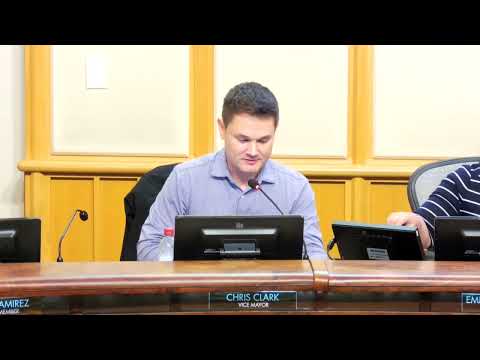
During the Biodiversity & Urban Forest Plan Study Session, Council conducted a straw poll on eight implementation-related items.
Council straw poll — Biodiversity & Urban Forest Plan Study Session
April 28, 2026
This excerpt focuses on the Council straw poll during the April 28, 2026 Biodiversity & Urban Forest Plan Study Session.
The corresponding portion of the City of Mountain View’s original meeting recording runs from 1:42:52–1:56:53.
View the original City meeting recording ↗Eight elements of Council direction
-
01Foundational City plan
Council straw pollAlthough this Plan isn’t regulatory, Council supports the implementation of the Plan. This Plan should be considered as one of the foundational plans of the City like the General Plans or Precise Plans. Concepts and criteria in the Plan should be considered in City projects going forward and in budget development.
-
02Dedicated staff oversight
Council straw pollA specific staff member should be assigned to oversee the Plan’s monitoring program so it doesn’t get lost in the laundry list of responsibilities most staff have. This will also be crucial for making sure that collaborations across departments happen. Of course there will need to be staff from many departments involved. (AH)
-
03Objective standards
Council straw pollThe Plan concepts will be used to develop objective standards as appropriate but especially with respect to roadways and development. (AH)
-
04Adaptive management
Council straw pollAn adaptive management plan is needed to make sure that we learn as we go. It should include a community meeting in about one year. After that evaluations should be done every 3–5 years. (AH)
-
05Native trees and understory
Council straw pollEmphasize planting native trees and understory, locally sourced where possible. This is particularly important with oaks. That was also increase the percentage of native.
-
06Community recommendations
Council straw pollStaff should carefully consider comments from GreenSpacesMV, MVCSP, Daniel Shane, incorporating suggestions as reasonable. Also add the Bird Alliance. Emphasize on the Actions 1, 17, and 26 that was mentioned in GreenSpaces and MVCSP’s list. (AH)
-
07Volunteers and partners
Council straw pollUse volunteers and partners in implementation, essentially funding for beautification. (PS)
-
08Greening in CIP funding
Council straw pollInclude greening in CIP funding. (AH)
What Council said vs. what was recorded
The City Clerk’s May 21, 2026 Actions memorandum documents Council’s consensus and feedback from the April 28 study session. The table below compares the language from the Council straw poll with the corresponding language in the Actions memorandum.
Left: Council straw-poll language transcribed from the April 28 meeting recording, above. Right: the corresponding language in the City Clerk’s May 21, 2026 Actions memorandum.
| # | Council straw poll | Actions memorandum |
|---|---|---|
| 1 | Although this Plan isn’t regulatory, Council supports the implementation of the Plan. This Plan should be considered as one of the foundational plans of the City like the General Plans or Precise Plans. Concepts and criteria in the Plan should be considered in City projects going forward and in budget development. | Not included as a separate feedback item. |
| 2 | A specific staff member should be assigned to oversee the Plan’s monitoring program so it doesn’t get lost in the laundry list of responsibilities most staff have. This will also be crucial for making sure that collaborations across departments happen. Of course there will need to be staff from many departments involved. (AH) | Assign a specific staff member to oversee the plan’s monitoring program for continuity and collaboration across departments. |
| 3 | The Plan concepts will be used to develop objective standards as appropriate but especially with respect to roadways and development. (AH) | Use plan concepts to develop objective design standards as appropriate (roadways and development) |
| 4 | An adaptive management plan is needed to make sure that we learn as we go. It should include a community meeting in about one year. After that evaluations should be done every 3–5 years. (AH) | Adaptive management plan with a community meeting check-in around the one-year mark, with regular check-ins scheduled thereafter with the Parks and Recreation Commission and the City Council |
| 5 | Emphasize planting native trees and understory, locally sourced where possible. This is particularly important with oaks. That was also increase the percentage of native. | Emphasize planting native trees that are locally sourced where possible |
| 6 | Staff should carefully consider comments from GreenSpacesMV, MVCSP, Daniel Shane, incorporating suggestions as reasonable. Also add the Bird Alliance. Emphasize on the Actions 1, 17, and 26 that was mentioned in GreenSpaces and MVCSP's list. (AH) | Consider comments from community partners such as GreenSpacesMV, Mountain View Coalition for Sustainable Planning, Daniel Shane, and the Bird Alliance |
| 7 | Use volunteers and partners in implementation, essentially funding for beautification. (PS) | Bring back funding recommendations for volunteers and partners to assist with implementation |
| 8 | Include greening in CIP funding. (AH) | Include greening in Capital Improvement Program funding |
City Council Actions — April 28, 2026
City Clerk memorandum
May 21, 2026
The Actions memorandum also contains this introductory Council-consensus statement:
“By consensus, the Council generally agreed that the draft Biodiversity and Urban Forest Plan is generally consistent with community priorities and City policies and plans, and that it provides an appropriate long-term policy framework that balances ambition with flexibility to support phased implementation, with the following feedback:”
Differences that matter for implementation
Several details stated during the straw poll do not appear in the same form in the Actions memorandum.
-
Item 1
The straw poll included treating the BUFP as a foundational City plan and considering its concepts and criteria in City projects and budget development. This does not appear as a separate feedback item in the Actions memorandum.
-
Item 4
The straw poll specifies evaluations every 3–5 years after the initial community meeting; the Actions memorandum instead says “regular check-ins.”
-
Item 5
The straw poll includes native understory, particular attention to oaks, and increasing the percentage of native vegetation. Those details are not included in the Actions memorandum.
-
Item 6
The straw poll specifically references Action 1, 17, and 26 from the GreenSpacesMV/MVCSP recommendations and incorporating suggestions as reasonable. Those details are not included in the Actions memorandum. See what each Action proposed, and what appears in the final Plan, below.
Community recommendations
Before the April 28 study session, Mountain View Coalition for Sustainable Planning (MVCSP) and GreenSpacesMV submitted detailed recommendations focused on implementation, accountability, transportation integration, shade and thermal comfort, standards, and coordination.
The April 27 letter identified eight recommended updates to Section 5.2: Vision to Action and highlighted three as the highest priorities.
Action 1
Green Infrastructure Integration in Transportation Projects
Action 17
Shade Integration and Thermal Comfort
Action 26
Standard Details and Specifications Update
These are the Actions referenced during the Council straw poll.
From recommendation to Final Plan
| Action | Community recommendation | Final Plan |
|---|---|---|
| 1 | Require transportation and public-realm projects to evaluate opportunities for trees and GSI, with documented exceptions and tradeoffs. | Retains Action 1 and adds direction to integrate biodiversity and urban-forest elements as standard components of capital improvement projects. |
| 17 | Address shade gaps along active-transportation corridors and establish annual corridor shade monitoring/reporting. | Adds active transportation infrastructure as a shade priority, explicitly calls for a shade goal for active transportation corridors, and adds soil-volume/tree-growth provisions. The proposed annual corridor reporting framework is not included in the same form. |
| 26 | Create a new Action updating Standard Construction Details, including A-22, tree-planting details, and Green Streets specifications. | Does not create the proposed standalone Action 26, but its Implementation Framework directs development of objective standards, roadway design approaches, green infrastructure strategies, and technical resources. Related technical guidance appears elsewhere in the Plan. |
Action 1
Green Infrastructure Integration in Transportation Projects
Community recommendation: Require transportation and public-realm projects to evaluate opportunities for trees and GSI, with documented exceptions and tradeoffs.
What made it into the final Plan?
The final Plan retains Action 1, but expands the supporting implementation language beyond the short Action heading.
“Action 1. Strategically integrate green features in active transportation improvement project design to both increase ecological value and achieve other City priorities.”
Show detailed analysis
The final Plan directs transportation projects to align with BUFP goals, and identifies streetscapes, bikeways, and walking paths as high-priority active-transportation corridors where habitat elements can be incorporated.
Added implementation direction in the final Plan
“Undertake feasibility studies and integrate biodiversity and urban forest elements as standard components of capital improvement projects to reduce dependence on additional funding where possible.”
This does not adopt the community proposal’s project-by-project evaluation requirement, exception documentation, Chief Transportation Officer approval, or Council tradeoff-disclosure provisions. However, it does add explicit direction to integrate biodiversity and urban-forest elements as standard components of capital improvement projects.
Priority: Medium-term · Lead: Public Works Department · Support: Community Services Department
Action 17
Shade Integration and Thermal Comfort
Community recommendation: Address shade gaps along active-transportation corridors and establish annual corridor shade monitoring/reporting.
What made it into the final Plan?
“Action 17. Prioritize shade tree planting in the Cooling Zone, mapped in Guide A: Urban Landscaping, to protect against heat and improve walkability.”
The Action heading itself remains similar to the earlier draft language, but the final Plan adds substantial supporting implementation detail, including a shade goal specific to active transportation corridors.
“Establish a shade goal for active transportation corridors.”
This directly addresses part of the concern raised in the April 27 community letter.
Show detailed analysis
Equity / heat prioritization
The final Plan connects Action 17 to the Parks and Recreation Strategic Plan equity framework, saying that framework will help prioritize urban cooling, shade, and green-infrastructure investments in areas with higher heat exposure and lower access to parks, canopy, and other green amenities.
Multiple benefits
The final Plan calls for aligning cooling-related tree planting with:
- Biodiversity support
- Landscape connectivity
- Walkability
- Traffic calming
- Public safety
Planting conditions
“Plant trees with larger canopies at maturity, and provide adequate planting conditions (e.g., soil volume, structure, and suspended pavement) to promote tree longevity and growth to their full size potential.”
The final Plan also calls for appropriate spacing between shade trees so they can achieve adequate canopy at maturity.
The final Plan does not appear to include the community proposal’s specific annual active-transportation shade-coverage reporting framework, including corridor shade coverage, net change over time, and annual reporting to Council.
Action 26
Standard Details and Specifications Update
Community recommendation: Create a new Action updating Standard Construction Details, including A-22, tree-planting details, and Green Streets specifications.
What made it into the final Plan?
The proposed Action 26 was not incorporated into the final BUFP as a standalone Action titled “Standard Details and Specifications Update.” Several of its underlying implementation concepts, however, appear elsewhere in the final Plan.
“Support the updates and/or development of ordinances, policies, objective standards, roadway design approaches, green infrastructure strategies, and technical resources that implement the Plan’s direction”
This directly incorporates much of the broader Council direction that Plan concepts should be used to develop objective standards, particularly with respect to roadways and development. The final Plan does not, however, name Standard Detail A-22 in this implementation responsibility.
Show detailed analysis
Objective standards and roadway design
Section 5.4, Implementation Framework, establishes a cross-departmental City Implementation Team and includes responsibility for translating the Plan into operational City tools.
The Plan also states that although it is not regulatory itself, implementation will occur through binding mechanisms including City ordinances, standards, permitting, and capital project review and requirements — which is part of why these standards/implementation provisions matter even though the BUFP itself is not regulatory.
Soil volume and tree design
Other portions of the final Plan also address several technical issues raised by the proposed Action 26. The Urban Forest Assessment says development standards such as minimum tree cover requirements, minimum soil volumes, and structural soil provisions can help the City support development while advancing urban-forest health and growth.
Guide A also contains technical guidance for soil systems in paved environments, including continuous planting strips, interconnected soil volumes, soil cells, and structural soil to support root expansion, infiltration, oxygen exchange, tree health, and longevity. Action 17 separately calls for adequate soil volume, soil structure, suspended pavement, and tree spacing to promote mature canopy and long-term tree growth.
These are related final-Plan provisions, not an adopted version of Action 26.
Green stormwater infrastructure
Guide A contains a specific guideline for vegetated green stormwater infrastructure, discussing bioswales, rain gardens, bioretention areas, green roofs, infiltration, evapotranspiration, pollutant reduction, multi-layered wildlife-supporting planting, biodiversity, and urban cooling. This is additional evidence that the final Plan contains technical Green Infrastructure guidance, distinct from the proposed request to revise City Standard Construction Details.
What remains more general
The final Plan incorporates a framework for objective standards, roadway design approaches, green infrastructure strategies, technical resources, soil-volume/tree-design guidance, and implementation through City standards and capital-project processes. However, the final Plan does not appear to include the specific proposed direction to:
-
Revise Standard Detail A-22
-
Explicitly incorporate the ATP Existing Conditions sight-triangle analysis into A-22
-
Undertake a named comprehensive Standard Construction Details update for BUFP implementation
-
Explicitly review Emeryville’s integrated Green Streets Standard Details as part of a formal Action
The final Plan’s Community Engagement Summary preserves related stakeholder input calling for road-design standards to incorporate natural elements — update road design standards to require natural elements, including issues such as street width, corner radii, driveway/sight triangles, dark skies, and plant palettes. This is community/stakeholder input preserved in the appendix, not adopted Action language.
MVCSP & GreenSpacesMV
BUFP Study Session Comment Letter
April 27, 2026 · 9 pages
Read the community comment letter (PDF)From plan to implementation
The next question is implementation. This page will track how the Plan’s recommendations and Council’s direction appear in City projects, budgets, standards, and future updates.
What we’ll be tracking
-
01
Project delivery
BUFP concepts in City projects and budget development
-
02
Standards
Development of objective standards
-
03
Capital program
Greening in Capital Improvement Program projects and funding
-
04
Biodiversity
Native trees and understory
-
05
Plan actions
Implementation of Actions 1, 17 & 26
-
06
Community review
Approximately one-year community check-in
-
07
Monitoring
Subsequent monitoring and evaluation
Documents & correspondence
City record
Final Biodiversity & Urban Forest Plan
City of Mountain View
Adopted June 2026
Final adopted plan · PDF
GreenSpacesMV hosts a local copy for reference and archival access. The original document is linked from the City of Mountain View website.
Community record
Missing attachment in City correspondence record
The correspondence posted by the City includes the April 27, 2026 email submitting the MVCSP & GreenSpacesMV comments and identifies the attached file, “2026-04-28 MV Council BUFP Study Session Comment Letter - MVCSP & GreenSpacesMV.pdf.” However, the nine-page PDF attachment itself does not appear in the posted correspondence packet.